

on 01/06/2026
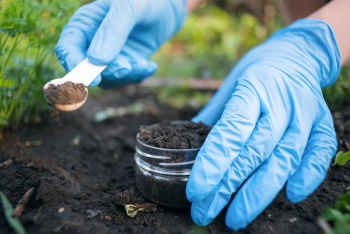
Are you fascinated by how energy and nutrients move through ecosystems? Do you enjoy exploring the vital role of soils and sustainable land management in agriculture? The Soil Science Australia – SA Branch Prize (R–12) could be the perfect opportunity for you! This award recognises the most outstanding entry in R-12 that demonstrates a deep understanding of soil science, land management, sustainable agriculture, or terrestrial ecosystem processes.
Here are some ways you can focus your Oliphant Science Award entry on this Sponsor Prize.
Crystal Investigation
Investigate how potash alum, a common mineral used to improve soil structure and nutrient availability, crystallises.
Games
Create a game that helps players learn about:
- Agricultural resource management. Players manage farms and make choices about crop rotation, fertilizer use, grazing and irrigation to influence soil health, crop yield and sustainability. Issues such as drought, pest outbreaks, erosion and floods all affect the outcome!
- Soil erosion. Players use their knowledge of water movement, conservation and soil stability to work together and prevent land degradation.
- Nutrient cycling. Players build nutrient cycles using cards to represent organisms, soil components, chemical compounds and processes.
Models and Inventions
- Create an interactive 3D cross-sectional model of healthy soil, showing soil horizons, roots and mycorrhizal fungi, earthworms, microbes and insects, water and air spaces.
- Develop a prototype Smart Soil Health Monitor to help farmers or gardeners monitor soil conditions such as moisture, temperature, pH and salinity.
- Design an innovative solution to help farms thrive during drought conditions. Explore ideas such as fog or dew harvesting, water-efficient planting systems, soil moisture retention technologies, or shade and cooling strategies.
Multimedia
Create an animated video to tell the story of:
- How soil forms over time through processes such as weathering, mineral formation and accumulation of organic matter.
- A drop of water travelling through different soils and landscapes.
Photography
- Life at Ground Level: capture life from an insect's perspective to show how healthy soils support diverse ecosystems and nutrient cycling. Ideas include ants transporting food, beetles under leaf litter, or fungi emerging from the soil.
- Against the Odds: Plants in Tough Places: photograph weeds or native plants emerging through footpaths, cracks in roads or building foundations to show how plant roots exploit tiny soil pockets and demonstrate resilience.
- Carbon Catchers: Show fallen leaves decomposing into rich organic matter to communicate how carbon moves through ecosystems and enters the geosphere.
- Wind at Work: Photograph plant roots stabilising soil on a windy site to show how vegetation protects soil from erosion.
Posters
- Harvesting Tomorrow: showcase future farming systems that protect and improve soil health or explain how healthy soils support food security.
- Carbon in Balance: communicate how soils store carbon and influence climate systems.
- Under the Surface: explore the relationship between mycorrhizal fungi and plant roots.
- Natural History Illustration: detail the intricate structures of sub-terranean insects, earthworms or fungi.
Programming, Apps and Robotics (including electronic games)
- Build an Autonomous Soil Sampling Robot that travels around a garden or paddock to map soil conditions, showing the value of precision agriculture.
- Develop an app that recommends soil management practices based on factors such as soil type, rainfall, slope and vegetation cover.
Science Writing
- Seeds of Science: How Plants Shape Our Lives. One Tiny Seed. Write about the journey of a seed from germination to ecosystem impacts to show your understanding of plant-soil relationships.
- Chemical Reactions That Changed the World. Feeding Billions: The Haber-Bosch Process. The production of nitrogen-derived fertilizers has transformed agriculture, but at what cost? Explore the ethics of fertilizer production and use.
- Science for Peace: Small Discoveries, Big Changes. The Discovery of Soil Microbes. Investigate how developments in our understanding of soil microbiology revolutionised sustainable agricultural practices.
Science Investigations
Design an investigation to explore:
- Nutrient cycling and decomposition. How do moisture, temperature or soil type affect decomposition rates?
- Carbon storage and regenerative agriculture. How does biochar affect moisture retention, soil condition or plant growth?
- Soil chemistry and nutrient availability. What effect does soil pH have on seed germination or plant growth?
Share:


